

Europe – EU Entry/Exit System(ESS) Start Operations on 12 October 2025
2 September, 2025
The new Entry/Exit System (EES) will start operations on 12 October 2025. European countries using the EES will introduce the system gradually at their external borders. This means that data collection will be gradually introduced at border crossing points with full implementation by 10 April 2026.
What does progressive start of the EES mean?
The Entry/Exit System (EES) will be deployed gradually across the external borders of the 29 European countries over a period of 6 months. These European countries will introduce the different components of the EES in phases, including the collection of biometric data, such as facial image and fingerprints. This means that travellers’ biometric data (facial image and fingerprints) might not be collected at every border crossing point right away, and their personal information may not be registered in the system. Passports will continue to be stamped as usual.
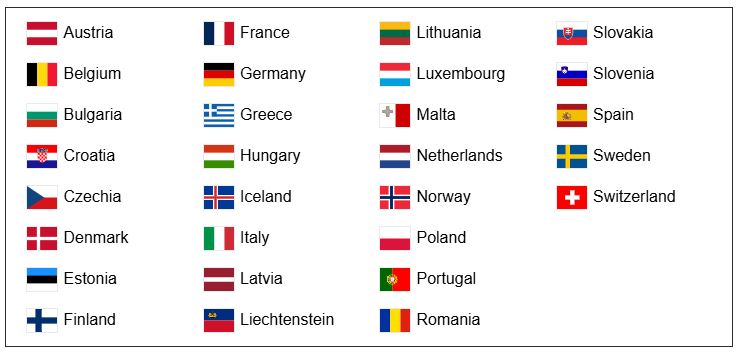
This progressive implementation will last until 09 April 2026. From 10 April 2026, the EES will be fully operational at all external border crossing points of the European countries using the system.
What does the ESS do?
The EES applies to you if you are a non-EU national travelling for a short stay to a European country using the EES and you either:
- possess a short-stay visa; or
- do not need a visa to stay for a maximum of 90 days in any 180-day period.
Your travel document data and other personal data will be collected, including your entry and exit dates, and will be registered electronically in the system. This procedure will facilitate your border crossing.
If you overstay the period allowed in the European countries using the EES, the system will identify you and record this information.
In the event that the authorities refuse you entry, the system will also record this information.
The period of 90 days in any 180 days is calculated as a single period for all the European countries using the EES.
What is the purpose of the ESS?
- Modernises border management across the European countries using the system; by electronically registering non-EU nationals’ entries and exits, or entry refusals;
- Makes border checks more efficient, gradually improving the experience for travellers;
- Effectively combats identity fraud by collecting biometric data;
- Improves security within the EU;
- Helps combat terrorism and serious organised crime by acting as an identity verification tool.
For most of the non-EU nationals, the EES:
- Provides precise information on the maximum duration of their authorised stays in the territory of all European countries using the EES;
- Replaces the need for passport stamping (unless exceptions apply);
- Gradually reduces waiting times in passport control queues by introducing automated border controls (where available and under the supervision of passport control officers).
The EES also makes it easier to identify people:
- Who have stayed for longer than permitted (overstayers);
- Who are using fake identities or passports;
- Who have no right to enter the European countries using the EES.
As a result, the EES supports the identification of terrorists, criminals, suspects and victims of crimes.